

The new project will develop ways to measure the process and outcomes of equity-centered leadership in schools, including evidence models and data tools, in the latest offshoot of the Comprehensive Assessment of Leadership for Learning (CALL).
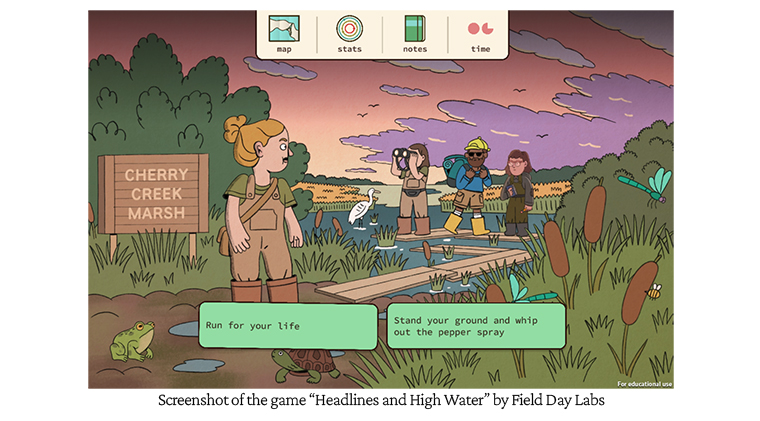
The story shows students in a recent Marshfield High School class learning about journalism while having fun role-playing the engaging online educational game 'Headlines and High Water'.
Registration is open now through March 21 for this year's conference, which is open to all educators who want to learn about current research and district practices that further racial equity in schools. The focus will be on evaluating equity initiatives and utilizing data for systems change.
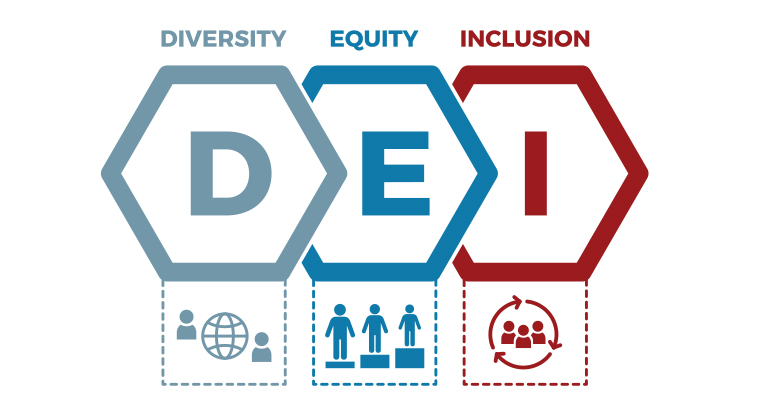
Driven by the goal of improving U.S. ability to solve complex problems, the project will give engineering professional societies new tools and resources to promote DEI culture change and foster STEM excellence using a newly released international standard that supports full engagement of marginalized groups.
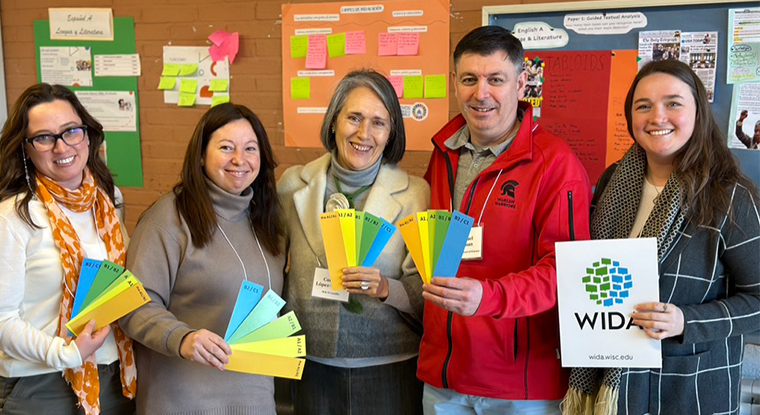
WIDA MODEL Online, an English language proficiency assessment for students in grades 1-12, can now be understood on a scale used by educators around the world.
ITP | Knowledge Mobilization: Communicating Your Research for Impact
Jessica Rodrigues, Assistant Professor, Special Education, University of Missouri
WCER and its projects host dozens of lectures, panel discussions and other events throughout the academic year.
You can view video recordings of these lecture series on our website:
Or, you can browse all our videos here!
UW-Madison School of Education, Apr 19
WCER Communications, Apr 19
WCER Communications, Apr 19
WCER Communications, Apr 12
School of Education Communications, Apr 11
Apr 1
"Facing the challenge: Connecting concepts to practice to improve STEM faculty professional development," Donald Gillian-Daniel, Selyna Pérez Beverly, Innovative Higher Education, March 28, 2024
New book: "Strategic Human Resources Management in Schools: Talent-Centered Education Leadership," Carolyn Kelley, Henry Tran, February 2024
Report: “Full Day 4K in Year Two: Understanding Learning Gains for Students,” Madison Education Partnership, March 18, 2024
Report: “Full-Day 4K in Year Two: Examining Classroom Pedagogy in 4K and 5K,” Madison Education Partnership, March 18, 2024
"Measuring returns to experience using supervisor ratings of observed performance: The case of classroom teachers," Courtney Bell, Jessalynn James, Eric S. Taylor, James Wyckoff, Journal of Policy Analysis and Management, March 7, 2024
Sadhana Puntambekar has been awarded $309,649 from the National Science Foundation, in a subcontract from Auburn University, for “An Intelligent Assistant to Support Teachers and Students in Simulation-Based Science Learning” through July 31, 2025. (040224)
Richard Halverson & Christopher Saldaña have received a grant of $2,000,000 from The Wallace Foundation for the “Comprehensive Assessment of Leadership Learning/Mapping Equity Indicators” (CALL-MEI) through Dec 31, 2025. (032624)
Kate Vieira has received a grant of $43,193 from the Spencer Foundation for “Youth Writing for Peace in Colombia: A Collaborative Analysis of Teachers’ and Students' Perspectives” through Aug. 31, 2025. (032624)
Wisconsin Center for Education Research
School of Education
University of Wisconsin–Madison
1025 West Johnson Street, Suite 785
Madison, Wisconsin 53706

Copyright ©2023 Board of Regents of the
University of Wisconsin System